Total Pageviews

Showing posts with label 2.5 External Influences. Show all posts

Saturday, 23 April 2016

The Effect on Businesses of Changes in Inflation


Inflation


Inflation means a sustained increase in the general price level in an economy. 

Inflation means there is an increase in the cost of living.

If a 'basket of goods' costs £100 on the 1'st January 2016 and cost £103 on the 1'st January 2017 then the inflation rate is 3%.


CPI = Consumer Price Index.

Unlike the Retail Price Index it does not include 
housing costs.


What causes prices to rise?

'Cost push' factors such as rising wages or other input prices.

'Demand pull' factors if the economy is growing very rapidly and consumers have lots of disposable income.

How do high levels of inflation affect businesses?

1. Rising costs.

Will companies automatically pass these price rises on to customers?

2. Employees will want pay rises. 

This may lead to 'industrial action'.


3. Putting prices up costs money. 

So called 'menu costs'.

Not so expensive to change this 'sexist' menu:


Very expensive to change this catalogue:


4. If inflation is very high in the UK then it makes British products less competitive in international markets.

Inflation following the Brexit vote:


Deflation: From the graphs above can you identify when prices were falling in the UK?


The big impact on business of deflation is uncertainty. 

Why make a considered purchase today when you know the item may be cheaper tomorrow?


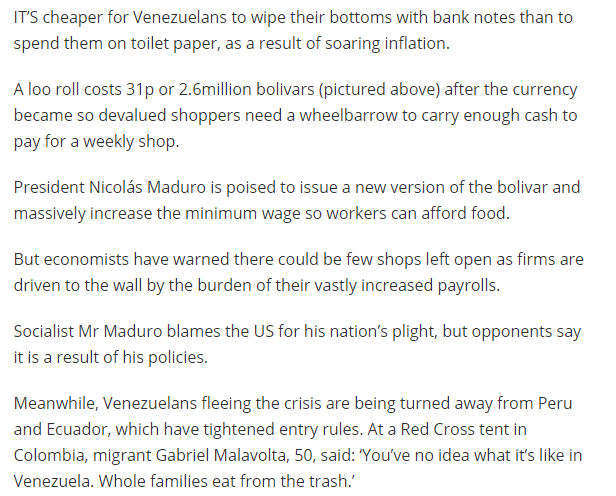
Hyperinflation:
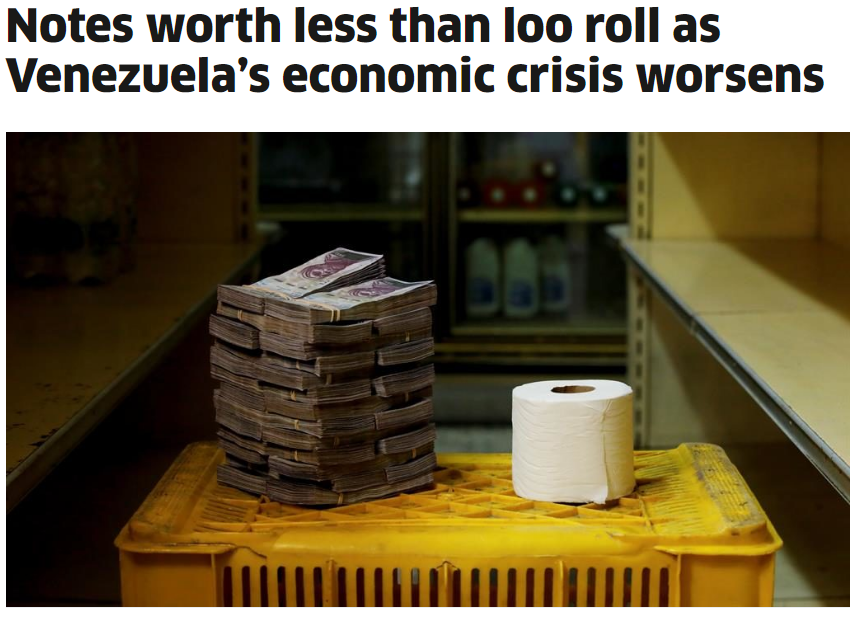


Hyperinflation explained here.

Friday, 22 April 2016

The Business Cycle

What Is a Business Cycle?


The business cycle describes the rise and fall in production output of goods and services in an economy. 
Business cycles are generally measured using the rise and fall in real gross domestic product (GDP). 
It would be nice if there was steady growth of GDP (National Income).....

.......but over time there have been times when growth has slowed down or even become negative.

Recession:

Two or more quarters (six months) of negative GDP growth.

2008 / 9 the recession was caused by a Western banking crisis.

Banks failed or were rescued by the government.


In a recession demand will fall for many goods and services, particularly non-essentials.

Unemployment will rise.

Business confidence is low.

There will be an increasing number of business failures.


Recovery:

Demand begins to pick up.

Business confidence increases.

Unemployment starts to fall.

Boom:

This is the peak of the business cycle. 

GDP is growing at a historically fast pace.

Existing businesses may expand and new businesses are being created.

Wages are likely to be rising.

'Demand pull' inflation is likely to be the major economic problem at this stage of the trade cycle.

Downturn.


GDP growth begins to slow down.

Demand for goods and services flattens out and may begin to fall.

Unemployment will begin to rise and businesses will be much less likely to expand.

The impact of the business cycle on business. 

What will happen to the following at each stage of the business cycle?

Output.

Profit.

Business confidence and investment.

Employment.

Business start-ups and closures.

Some businesses will do well in a recession.

Can you think of any examples and the reasons why.


Thursday, 21 April 2016

Monetary Policy: Interest Rates and Business


The cost of borrowing money or the return to savers.

The use of interest rates to help control the economy is known as monetary policy.

The Bank of England 'base rate' influences all interest rate decisions by UK financial institutions.

The Bank of England changes interest rates in order to meet a government inflation target of 2% (minus or plus 1% either side)

August 2016 the Bank of England cuts interest rates to 0.25%. Details here.

What are they worried about?


The rate of interest is a cost to a business.

Changing interest rates has an impact on investment decisions.

If interest rates rise investment is very likely to fall
because the costs of loans will rise.

Click on the picture:


Lower consumer demand in the economy makes investment less attractive.


Why rising interest rates influence consumer demand:

Consumer face higher payments for loans and credit card bills.

Mortgage payments will increase.
(Fixed rate repayments are not 'fixed' forever) 

At what stage of the business cycle do you think the Bank of England might raise interest rates?

Exchange Rates and Business


The exchange rate is the price of one currency in relation to another.

Changes in exchange rates have an impact on the prices of imports into the UK and the price of exports from the UK.

Exchange rates change 24/7 on 'forex' markets around the world.

Currency data from the BBC. Details here.

Factors which determine the exchange rate. Details here.


If the pound gets stronger against another currency (eg moving from £1.00 : $1.50 to £1.00 : $2.00) we say that it has appreciated in value.

A movement the other way would be a depreciation in the value of the £.

If the pound appreciates in value:

UK exports become more expensive because overseas customers have to give up more of their currency to buy the same amount of pounds.

UK imports become cheaper because the pound will buy more.

If the pound depreciates in value:

UK imports become more expensive whilst exports become more competitive in international markets.

Brexit:

Wednesday, 20 April 2016

Fiscal Policy


Fiscal policy involves changing tax rates and government spending to control the economy.

Main types of tax in the UK:
  • Income tax – This a tax on people’s income. The basic rate of income tax is 20%, paid on income over the income tax threshold of £11,000.
  • National insurance contributions. Another type of income tax is national insurance contributions, which are based on a similar principle of taking a certain percentage of income.
  • Consumption tax –  VAT – 20%
  • Excise duties on alcohol, tobacco
  • Corporation tax – tax on company profit
  • Stamp duty – tax on buying houses / shares
  • Capital gains tax
  • Inheritance tax
  • Council tax
  • Business rates

Government spending:


There is intense pressure in the UK to turn the current budget deficit into a budget surplus. 

This would mean the government not spending all of its income and paying back some historic debt.

Cuts in government expenditure has put a great strain on the provision of public services and the pay of public sector workers.

The effect on businesses of changes in taxation:


Consumer spending may rise or fall.

Changes in VAT will alter prices.

Corporation tax is a cost on business profits.

Changes in employment taxes might influence hiring decisions.

Increasing tax avoidance (legal) and tax evasion (illegal)

The UK Finance Minister (The Chancellor of the Exchequer) announces changes to fiscal policy in the annual budget speech.

Tuesday, 19 April 2016

The Effect of Economic Uncertainty on the Business Environment.


Business hates uncertainty.

Uncertainty makes decision-making more difficult.

It reduces business confidence and creates unexpected events which businesses have to deal with.

June 2017: the existing South West Trains franchise comes to an end.

The company which wins the franchise will have to pay £700 million pounds to the government.

The contract could last 10 years.

What economic factors would a company wishing to bid for the contract have to consider?

1. The business cycle.

What stages of the business cycle would be positive or negative for running a railway?


2. Interest rates

The winning company may have taken on debt to pay for the contract.

3. Exchange rates

As part of the franchise deal the willing company must pay for new five carriage trains built by Siemens (a German company).


4. Inflation

Rising prices may lead to staff taking industrial action in order to gain 'inflation busting' pay rises.


5. Taxation

Currently there are no taxes on train tickets.

What if the government extended VAT to all public transport.

6. Government spending

Currently the government pays for some loss making rail services on social grounds.

What if this money was removed?

Can you see why business hates economic uncertainty?

Monday, 18 April 2016

Legislation 1


One of the roles of government is to provide a legal framework in which businesses can operate and ensure that certain groups are protected.

1. Consumer protection


Legislation designed to protect consumers in their dealings with businesses.

Sale of Goods Act (As amended) 1979. Details here.

Food Safety Act (As amended) 1990. Details here.


Click on the picture:
http://www.bbc.co.uk/news/uk-wales-politics-25119724

How does consumer legislation affect businesses?

Raising costs.

If there was no legislation do you think costs would be lower?

Businesses have had to improve quality control and how they deal with complaints.

2. Employee protection.

Legislation that help to govern the relationship between employees, employers and trade unions in the UK.

If there were no legal protections some employers may exploit their employees. How?

The law states:
- employees should have a written contract of employment.

- unfair discrimination is illegal. (Equality Act 2010)


- dismissal must be 'fair.'

- men and women must be paid the same for work of 'equal value'.


- employees should be paid the 'National Living Wage'.


- employees that are made redundant may be entitled to redundancy pay if they have worked at a company for a certain period of time.

Employment tribunals settle many claims under employment law.


How does employment legislation affect businesses?

Compliance checks such as the right to work in the UK are time consuming.

Added HR costs such as policies for dealing with bullying, harassment, disciplinary procedures or flexible working.

Higher labour costs.

Financial penalties and bad publicity if the business is found to have broken the law. An example here.

However: employment legislation can create positive effects on business.

Inclusivity, belonging, motivation, employee welfare can all lead to increased productivity, reduced absenteeism and cut staff turnover.

An example here.

3. Environmental protection

Legislation covers issues such as:
- pollution
- destruction of wildlife habitats

How does environmental legislation affect businesses?

Environmental legislation offers opportunities and threats to UK businesses.

Some businesses market themselves as being environmentally friendly.


Some businesses create products to help firms
comply with legislation.

There may be a financial cost associated with environmental protection e.g. higher energy bills because of the development of renewable sources of power.

Operations may change because of the need to reduce landfill, such as increased recycling or reduced waste.

Click on the picture. What are the opportunities and threats to businesses you can identify from the story?

Sunday, 17 April 2016

Legislation 2

4. Competition policy

There is a need to monitor monopolies and markets which are dominated by a small number of large businesses.

More details here.

Why?

Without government regulation some businesses may exploit consumers by using anti-competitive practices.


- Increasing prices by collusion.

- Restricting consumer choice.

- Market sharing. 


The Competition and Markets Authority (CMA) is responsible for serving the interests of consumers.

It can investigate:

Proposed mergers.

Click on the picture for the CMA investigation into the proposed merger between Sainsbury's and Asda.


Investigating markets which may not be operating in the interests of the consumer.


How does competition policy affect businesses?

It allows 'challenger' firms to enter a market.


A more competitive business environment will benefit the economy.

Innovation is encouraged.


However...

Investigations by the CMA may delay a proposed merger or force the disposal of some of the joint firms assets. 

An example here.

5. Health and Safety

Legislation designed to protect the physical welfare of everyone who comes into contact with a business.


What do you think are the top ten causes of accidents in the workplace?


The Health and Safety at Work Act 1974 aimed to raise the standards of health and safety in the workplace.

Firms must:

Provide and maintain safety equipment and protective clothing


Provide protection from hazardous substances.

Provide adequate breaks.

Guarantee a hygienic environment.

Maintain appropriate temperatures.

Employees also have a responsibility to follow appropriate health and safety procedures.


How does health and safety legislation affect businesses?

Increased costs.

A written H and S policy will be produced in larger firms.

A H and S Officer may be employed.

Risk assessments may be carried out.

Benefits of H and S legislation.

A firm very compliant with the law will gain a good reputation and attract the best staff.

More loyal and motivated staff.

Less absence from work through accidents.

Penalties:

Fines and possible imprisonment. (Corporate manslaughter).

From:


To: 


From:


To: